SHARE ARTICLE
BY

Carlos Ramon Escandell
Jr Quantum Engineer
Every industry now generates more data than it can easily process, and the machine learning models that analyse it keep getting more expensive to train and run. Quantum machine learning explores whether quantum systems can take on some of these learning tasks using fewer resources.
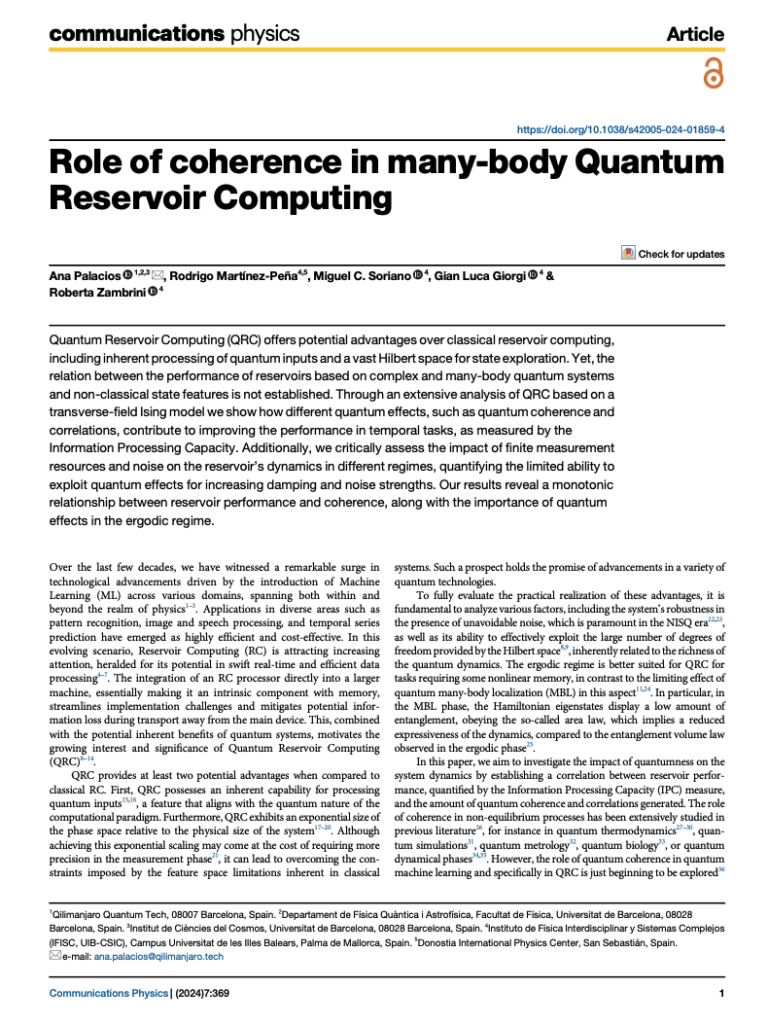
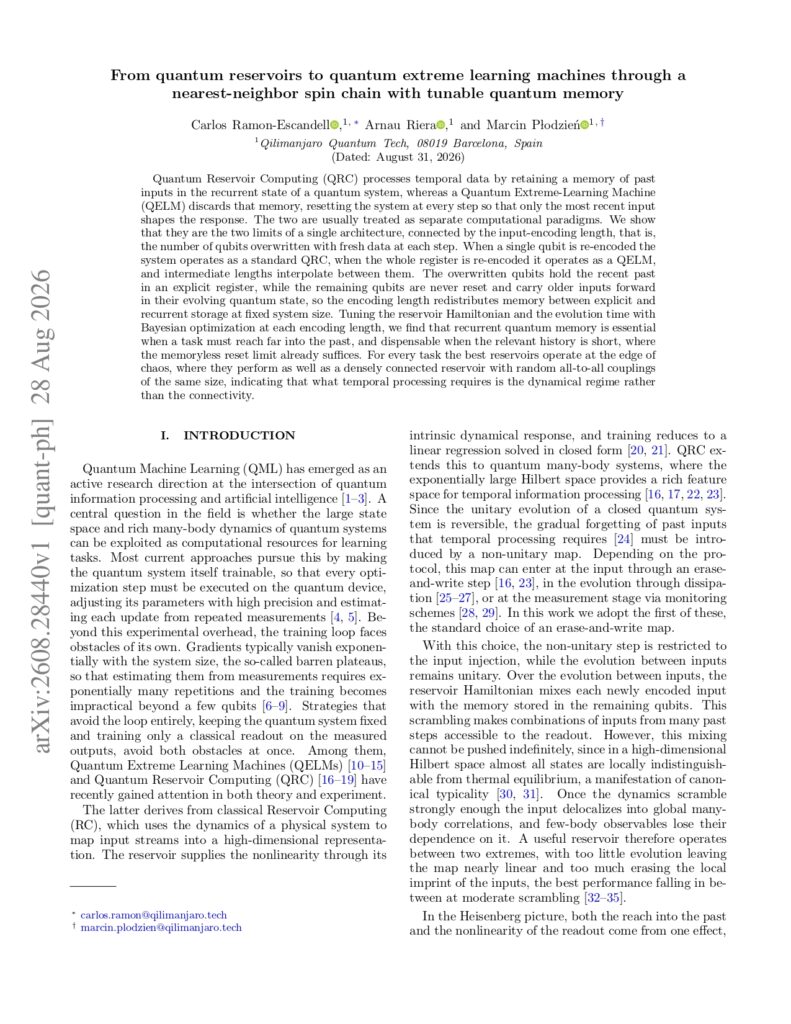
One of the most common of these tasks is forecasting: given a stream of data that unfolds over time, such as sensor readings, energy demand or financial signals, the goal is to predict what comes next from the patterns of the recent past. This is what Quantum Reservoir Computing (QRC) was built for. Unlike most quantum machine learning approaches, QRC does not train the quantum system: its dynamics stay fixed and only a linear readout is trained, which makes it easier to implement on current quantum hardware.
The Training Problem
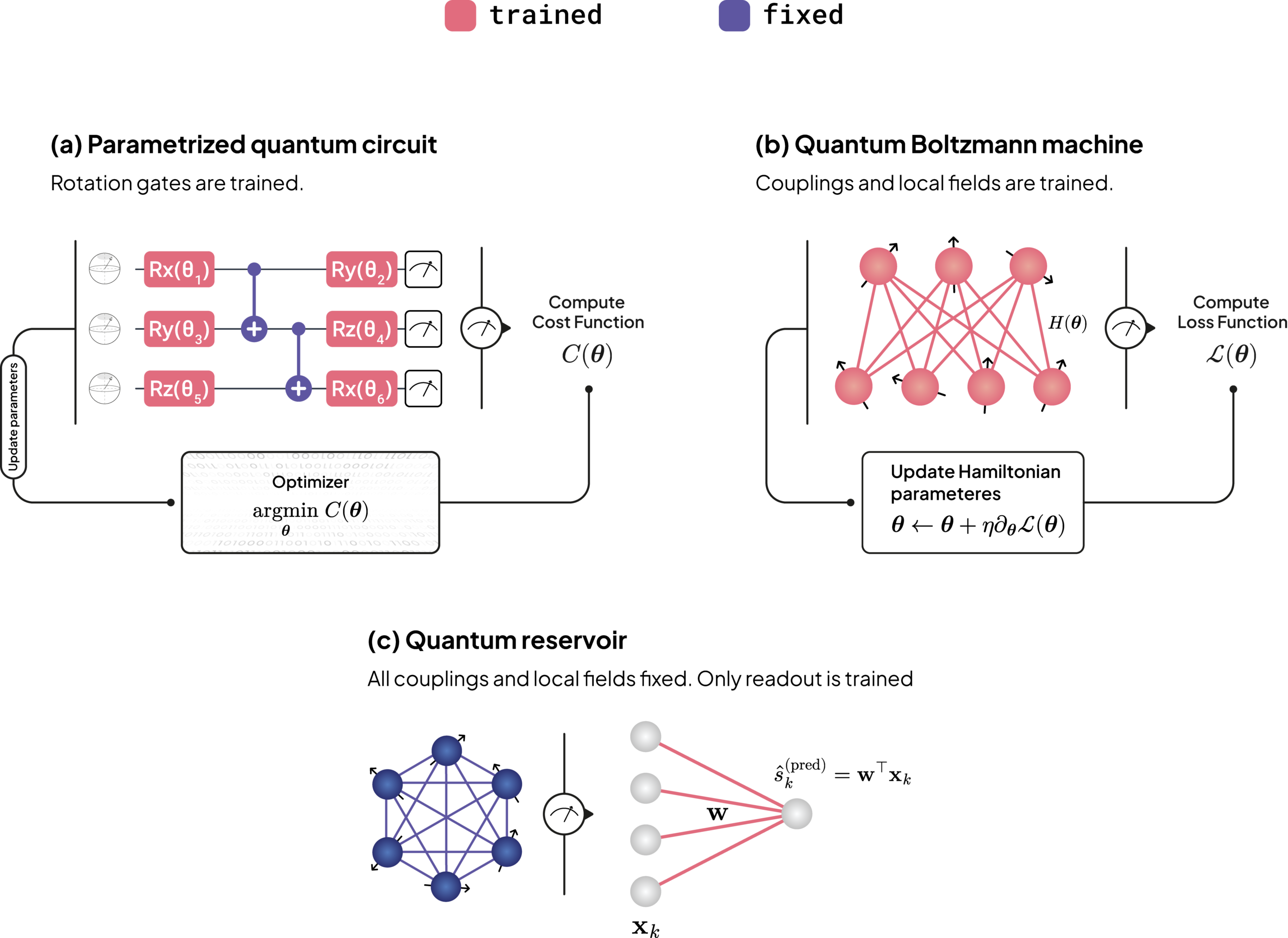
Most quantum machine learning algorithms follow the same strategy. Design a quantum circuit with adjustable single-qubit and two-qubit gates, run it, measure the output, compare it with the answer you wanted, adjust the parameters, and repeat. Thousands of times. Every adjustment means running the quantum hardware again, so training is slow and expensive.
These algorithms also face a bigger challenge known as barren plateaus. Training advances by following small improvements step by step, like walking downhill in search of the lowest point of a valley. As these circuits grow, the landscape turns flat almost everywhere. There is no slope to follow, nothing indicates which way to adjust the parameters and training gets stuck before finding anything useful.
Other quantum models keep the trainable part inside the quantum system, not in the gates but in the interactions between the qubits. A quantum Boltzmann machine, the standard example, learns exactly this way. The difficulty is in training those interactions. The methods to do it exist on paper, but they need quantum hardware beyond what is available today, so training these models at a useful scale remains out of reach. On top of that, the interactions the model needs may not be the ones the device can offer.
The pattern behind both problems is the same. As long as what is being trained lives inside the quantum system, every training step has to go through the quantum hardware, with all its cost and complications of manipulating and tuning a quantum device. Quantum Reservoir Computing takes the opposite viewpoint. The training stays entirely on the classical side, while the parameters of the quantum system remain fixed.
How It Works
A quantum reservoir processes a time series step by step. At each step, the next value of the signal is written into the quantum system, the system then evolves under its fixed dynamics, mixing this input into its internal state, and then a set of measurements is taken. Those measurements are just numbers, a snapshot of the system at that moment, and they become the ingredients from which the prediction is built. Those numbers are fed into the only part of the whole scheme that is ever trained, a linear regression that learns how to combine them into the prediction. This training is inexpensive, always finds the best possible combination, and does so in a single calculation.
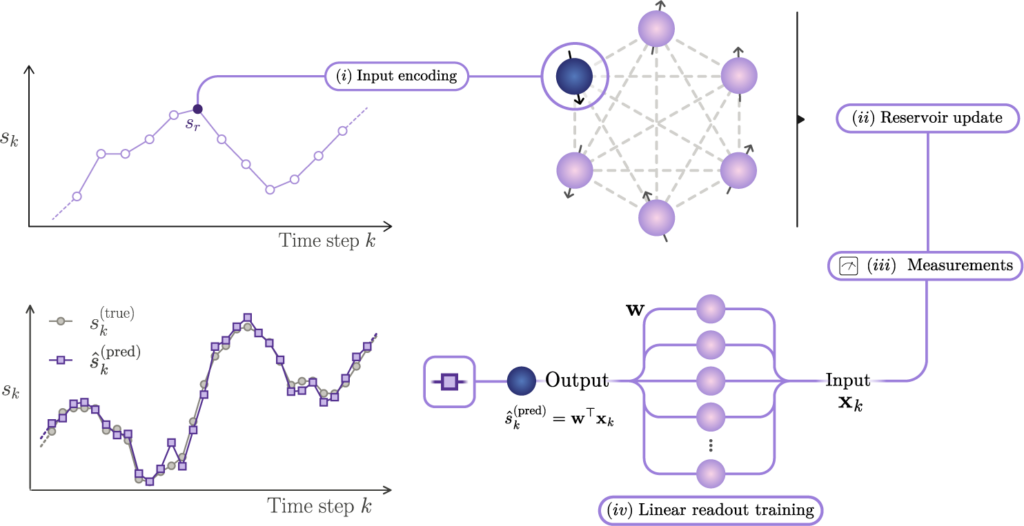
The quantum system contributes what a linear regression could never do on its own. Its dynamics mix each new input with the ones that arrived earlier, and this is what gives the reservoir memory. The state of the system depends not only on the latest input but also on the ones that came before it, so measurements taken at each step carry information about the recent past. That is why the method is well suited for forecasting. An energy demand curve, the charge-discharge cycles of a battery cell, the sensor readings of a production line, all of these signals carry their future in the correlations of their recent past, and that is exactly where a quantum reservoir is useful.
Where Qilimanjaro’s Work Fits
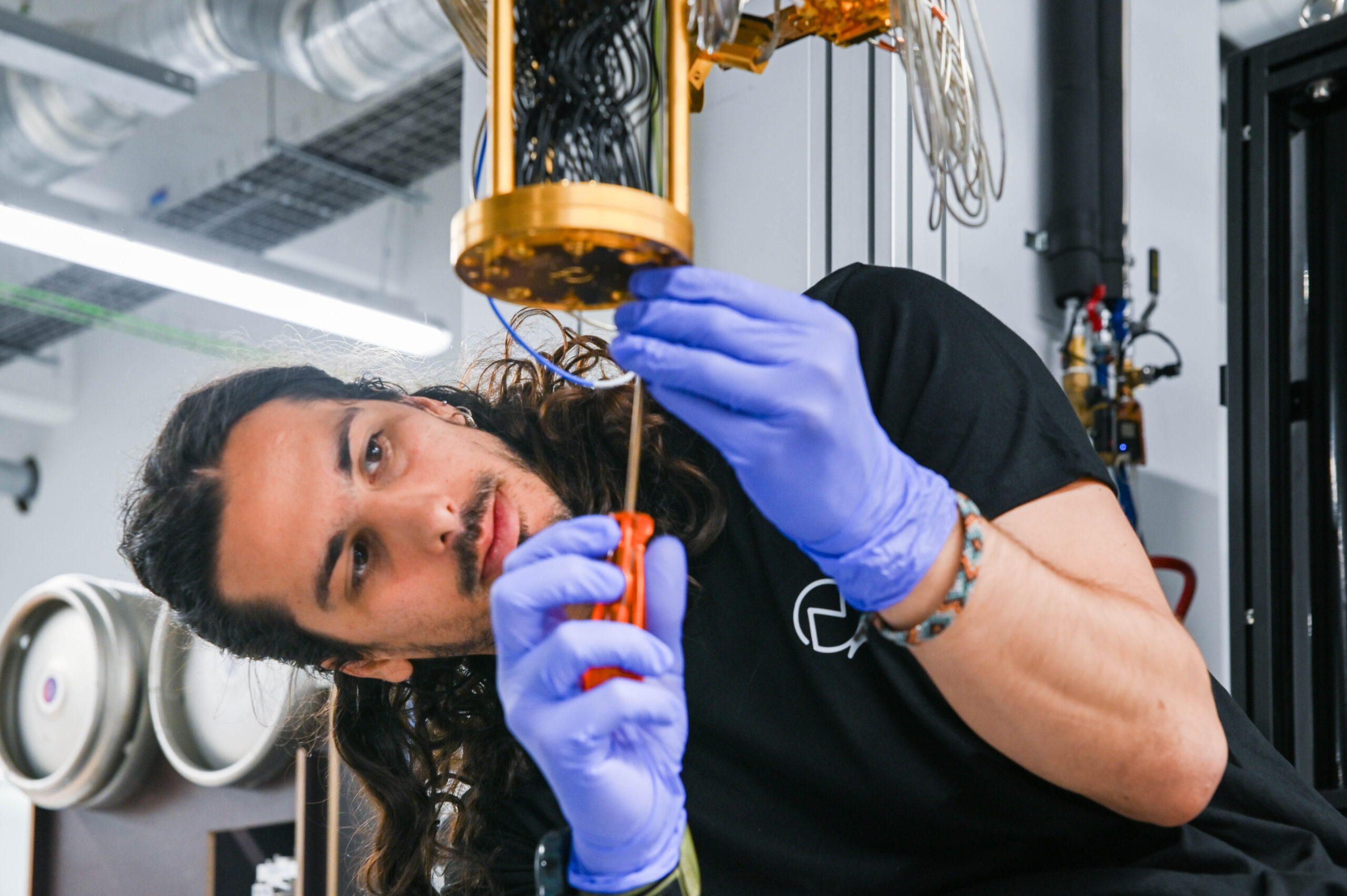
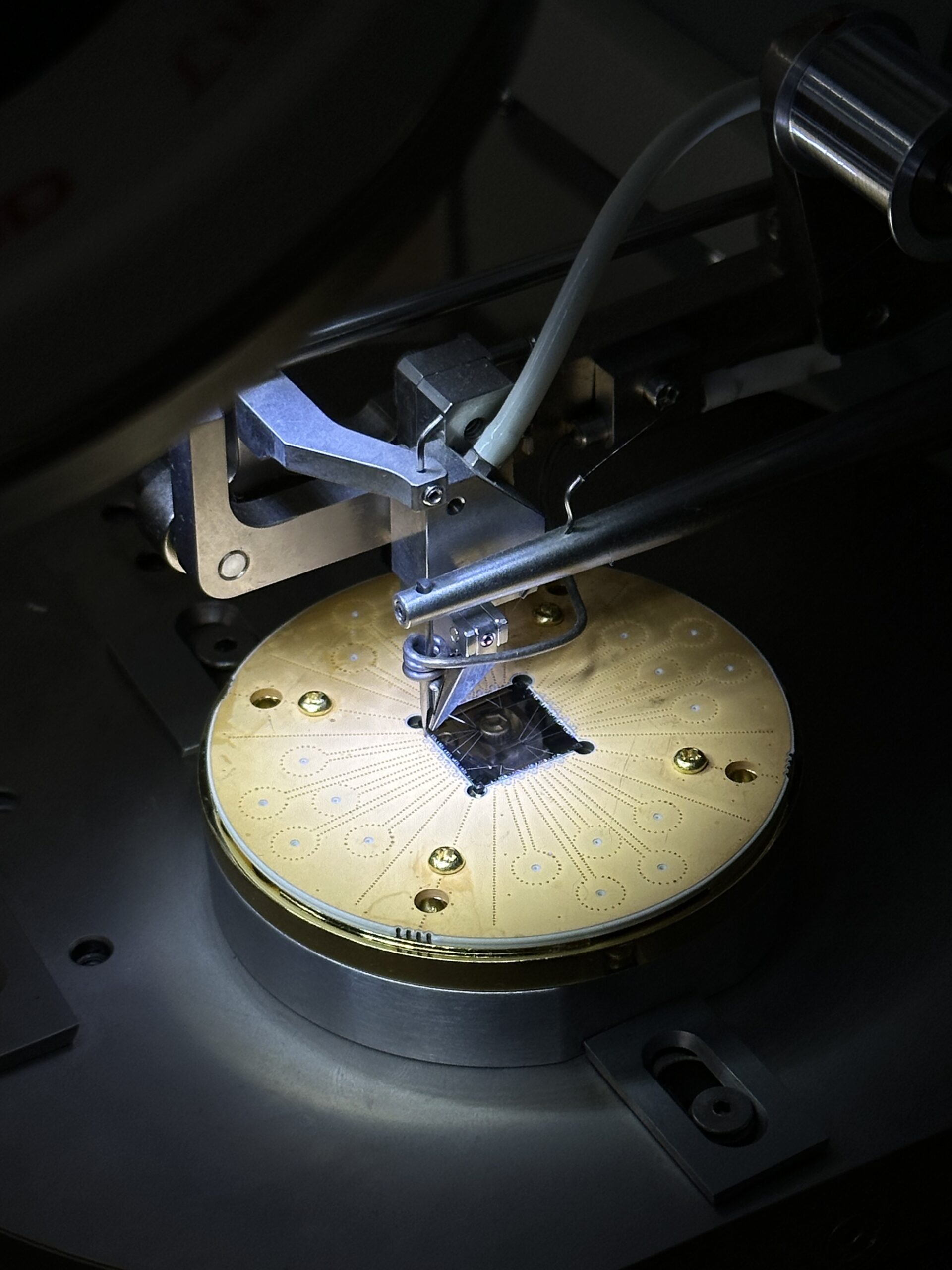
Quantum Reservoir Computing is particularly well suited to analog quantum hardware. Analog processors evolve continuously under a Hamiltonian rather than executing discrete gate sequences, matching the fixed dynamics that a quantum reservoir relies on. The device evolves under its natural dynamics and gets measured, with nothing being optimised or tuned inside the quantum system.
Qilimanjaro’s research team is developing QRC methods on analog hardware as part of a broader programme on quantum machine learning for industrial applications. Applications such as energy forecasting, grid optimisation and battery manufacturing provide ideal test cases because they generate continuous streams of time-series data, exactly the type of problems reservoir computing is designed to address.
This article introduced the principles behind Quantum Reservoir Computing. The next will show how to build and simulate a quantum reservoir using QiliSDK, Qilimanjaro’s open-source framework, with simulations you can run yourself.