Fluxonium: The Qubit Behind Qilimanjaro’s Advancements
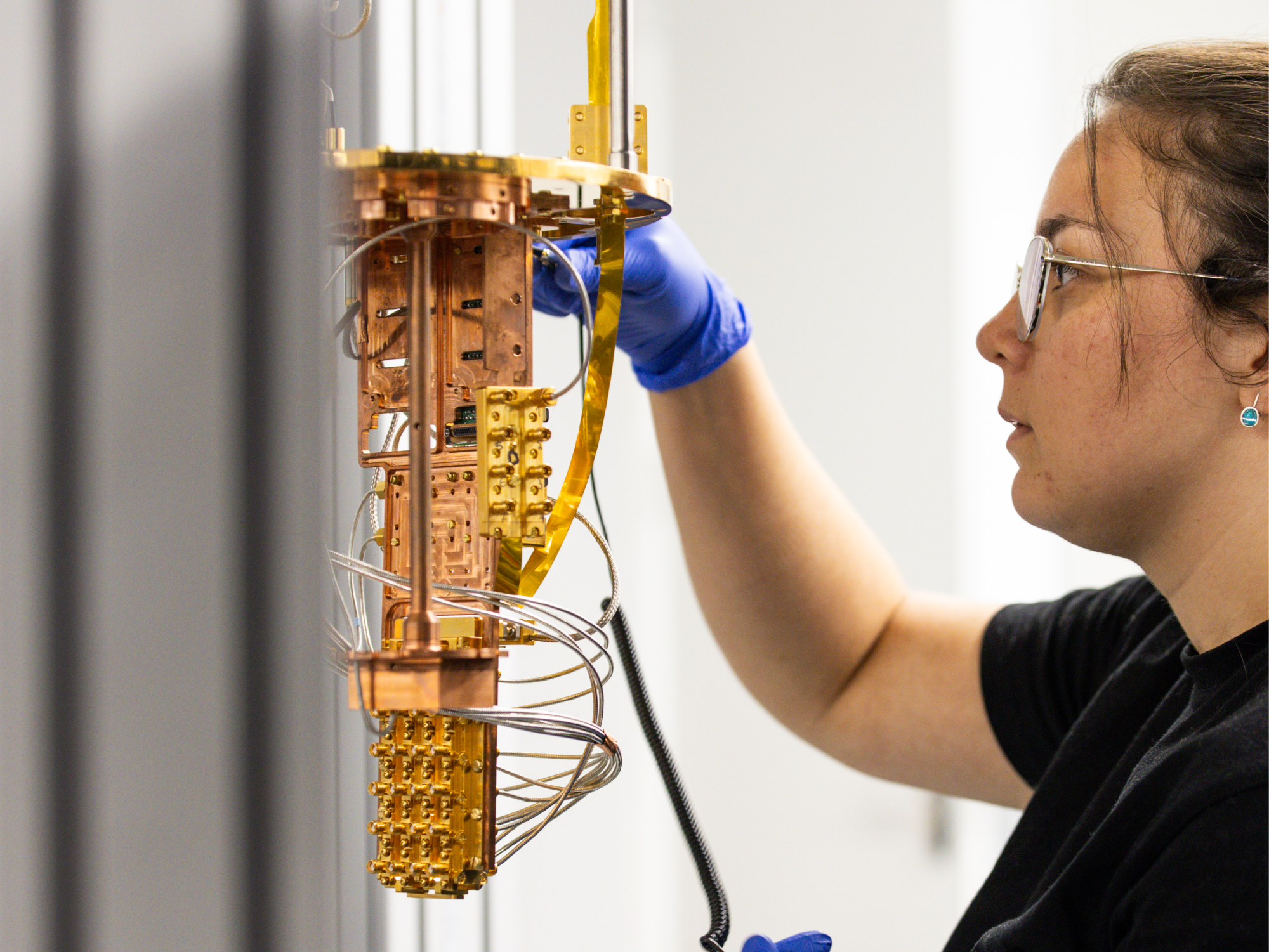
This year, we made meaningful progress in the core technology that powers our quantum computers: the fluxonium qubit.
As a full-stack company, we design everything from the quantum chip to the software and algorithms that run on top of it, and fluxonium sits at the heart of our architecture.
Compared to more common superconducting qubits like the transmon, fluxonium offers greater stability and cleaner control, allowing us to run computations with less noise and fewer errors. Its unique design supports highly robust quantum states, making it a strong foundation for building scalable analog and hybrid (digital-analog) quantum computers.
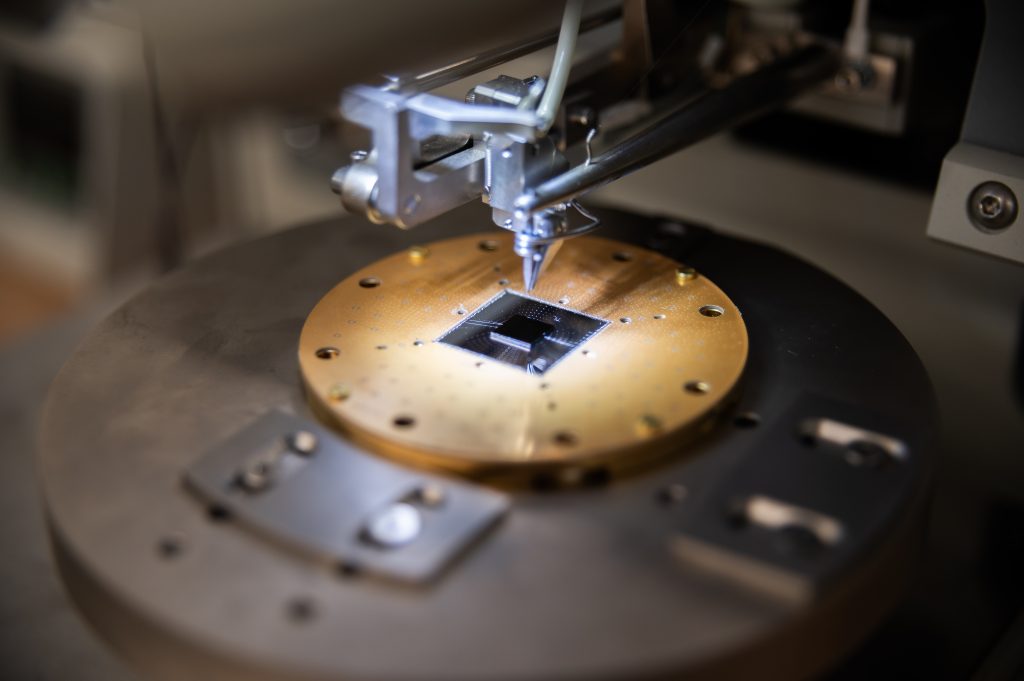
This year, we improved our designs, refined our fabrication methods, and deepened our understanding of how fluxonium can power more capable quantum processors for scientific and industrial use.
Moreover, fluxonium has demonstrated millisecond-scale coherence—among the longest reported for superconducting qubits, highlighting the strength of our design choices and technological approach.
Launching QiliSDK: A Unified Toolkit for Multimodal Quantum Workflows
Another major milestone was the release of QiliSDK, our open-source Python framework that unifies digital, analog, and hybrid quantum algorithm development in a single environment.
Introduced at the Munich Quantum Software Forum last October, QiliSDK serves as the entry point to our multimodal Quantum Data Center, connecting users to superconducting digital QPUs, analog QPUs, and classical HPC resources.
Its modular architecture provides high-level abstractions for circuits, Hamiltonians, variational workflows, and allows seamless switching between CPU, GPU, and QPU backends.

QiliSDK provides a unified software stack that supports any backend combination, making hybrid quantum computing accessible to developers and researchers through intuitive Python tools, and advancing our mission to enable practical quantum computation.
Opening Europe’s First Multimodal Quantum Data Center
We closed the year with one of our most exciting achievements: the opening of Europe’s first multimodal Quantum Data Center in Barcelona’s innovation district, the 22@.
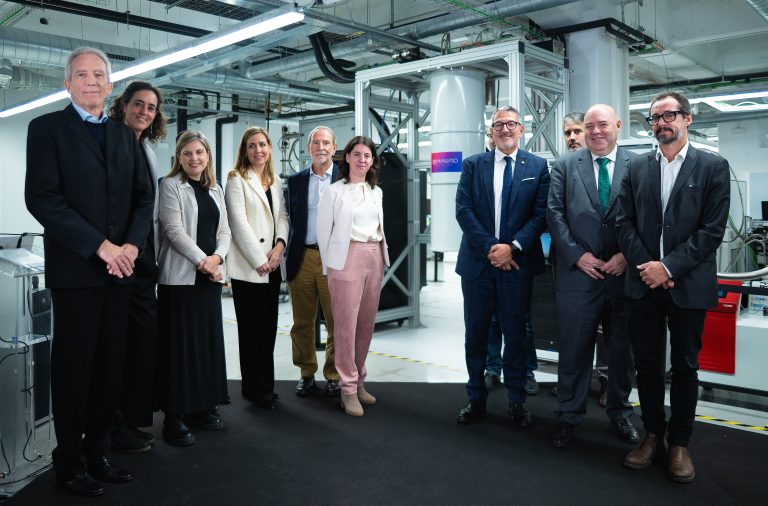
Designed to host up to ten quantum computers and serve thousands of users, our center integrates analog and digital superconducting processors with HPC resources, allowing organizations to match each problem with the most appropriate hardware.
Through our SpeQtrum QaaS platform, companies, universities, and research centers will be able to explore applications in chemistry, materials science, optimization, and AI using a unified, cloud-based environment.
This Quantum Data Center strengthens Europe’s technological sovereignty and establishes Catalonia as a global reference in quantum innovation.
Strengthening the Quantum Ecosystem Through Strategic Partnerships
Qilimanjaro strengthened its position in Europe’s quantum ecosystem through strategic partnerships that expanded our software and hardware capabilities and accelerated hybrid quantum deployment. We deepened our collaboration with Qblox to advance control of digital–analog systems at the Barcelona Supercomputing Center and our recently opened Hybrid Quantum Data Center.
We also joined the IMPAQT consortium in Delft as its only hybrid full-stack integrator, contributed to global training initiatives through our partnership with QURECA, and reinforced our commitment to accessible, responsible quantum computing by joining CERN’s Open Quantum Institute.
Together, these collaborations solidified Qilimanjaro’s role in building a more connected and inclusive European quantum landscape.
In parallel, we actively contributed to international working groups shaping the future of quantum infrastructure and services, including participation in the GSMA Quantum Network Services working group. We continued discussions and exploratory agreements with several industry players and technology providers, reflecting a shared interest in moving forward together, and strengthened our network of HPC-focused partners, including collaborations with Do IT Now & Oxigen.
Together, these efforts and collaborations solidified Qilimanjaro’s role in building a more connected and inclusive European quantum landscape.
Projects Refresher
This year, we made strong progress across multiple strategic projects and infrastructure initiatives within the European Innovation Council (EIC) framework, reinforcing our technological roadmap and operational capabilities. Several major projects reached key milestones, including the completion of ROCCQET, the launch and advancement of EuroQCS deliveries, and the final delivery phase of Quantum Spain.
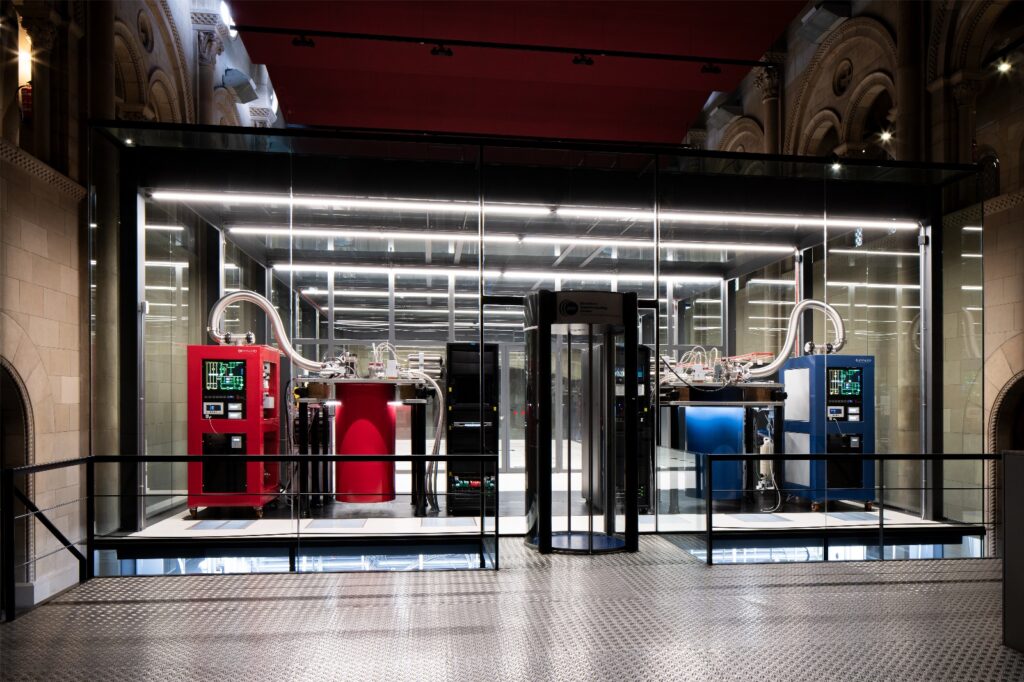
At the Barcelona Supercomputing Center (BSC), these efforts translate into a major step forward for Europe’s hybrid computing capabilities. With EuroQCS now underway and Quantum Spain nearing completion, BSC is on track to be equipped with three quantum machines in total: two digital systems and one analog—supporting our vision of quantum computing as a dedicated accelerator for selected workloads, operating in tandem with supercomputing.
Under EuroQCS, we began installing an analog quantum computer at BSC, expanding the site infrastructure with new cryogenic systems, achieving key milestones in system integration, improving grounding and shielding, and delivering the QiliSDK integrated into the full operational pipeline.
In parallel, Quantum Spain entered its final delivery stage, focused on deploying two digital quantum computers at BSC, between 20 and 30 qubits. Over the year, we advanced hardware installation and brought new systems online, strengthening the foundation for robust, scalable quantum capabilities for both research and industrial use.
We have also strengthened our scientific footprint through focused collaborations with leading research institutions and public entities, specifically assessing the viability of analog quantum computing in two concrete application areas: high-energy physics with CERN and public health with Hospital del Mar in Barcelona.
With CERN, we pursued a flagship application in high-energy physics: using Quantum AI to support track reconstruction for the ATLAS detector. This work leveraged Quantum Reservoirs, a fully analog quantum computing approach, to assess how analog platforms can contribute to demanding inference tasks in particle physics. In parallel within this collaboration track, we explored Quantum Extreme Learning Machines for image classification as a complementary demonstration of analog Quantum AI applied to pattern-recognition problems [1, 2].
With Hospital del Mar in Barcelona, we focused on public-health applications where optimization can deliver direct operational impact. The collaboration covered several concrete challenges, including drug-design workflows, phylogenetic tree analysis, medical materials optimization, and surgery scheduling. These efforts led to two patents and helped enable a reported 30% increase in surgical capacity, reducing saturation in patient recovery units (URPA and UCI).
A Year of Growth, Visibility, and Momentum
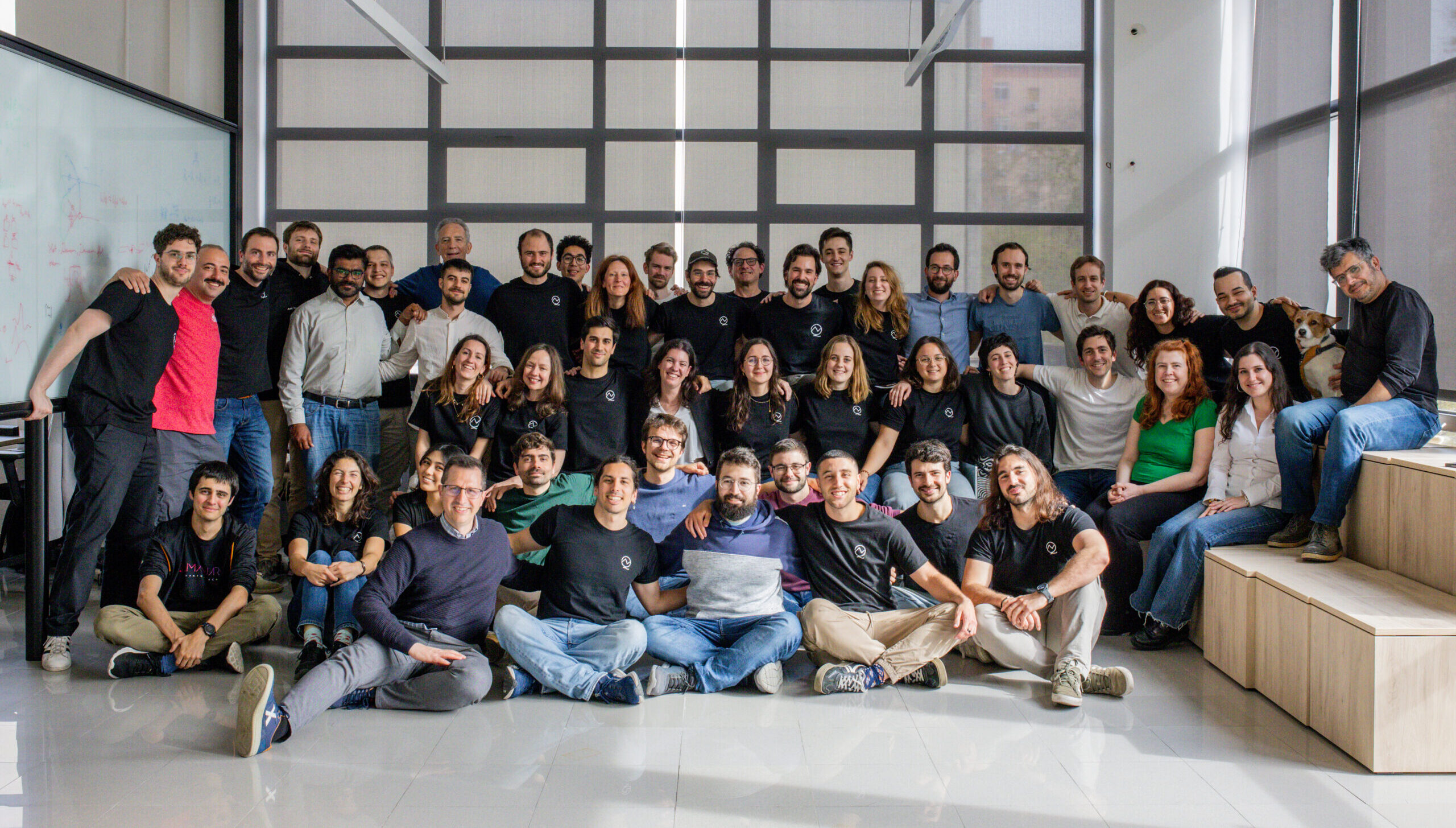
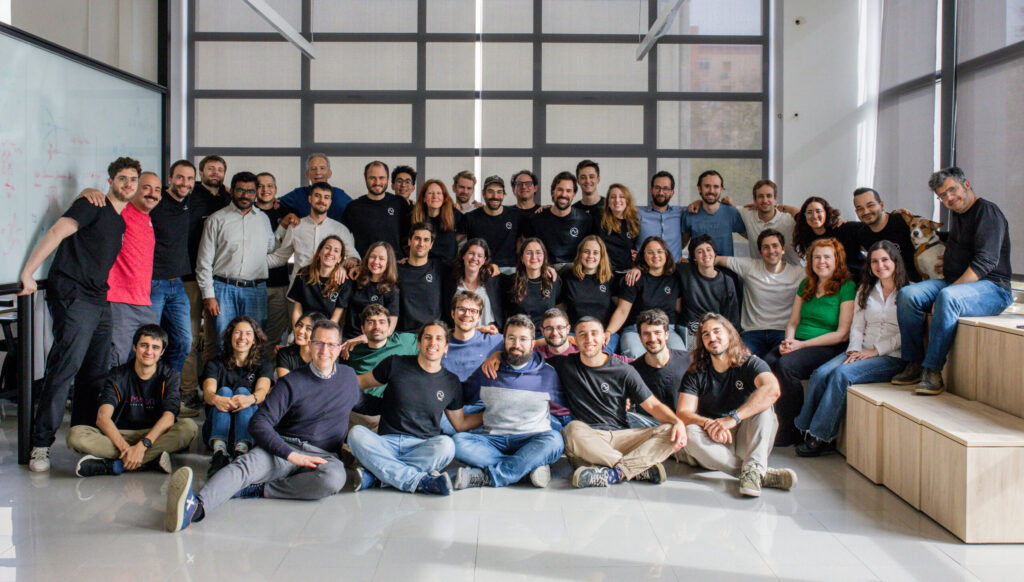
This year, our biggest achievement has been the extraordinary growth of the Qilimanjaro team. We expanded to 74 talented professionals, strengthening every layer of our full-stack strategy and bringing fresh scientific depth to our work.
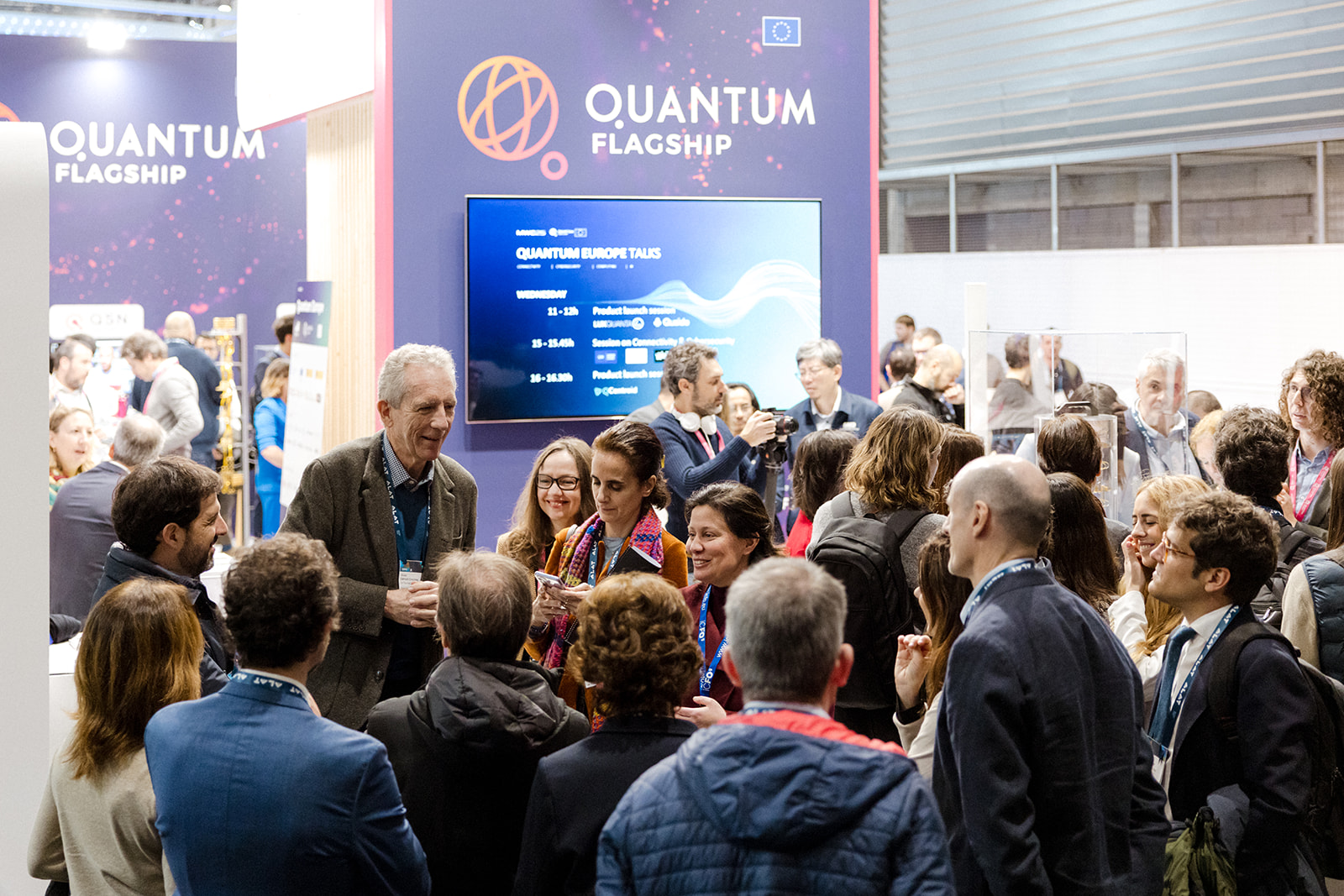
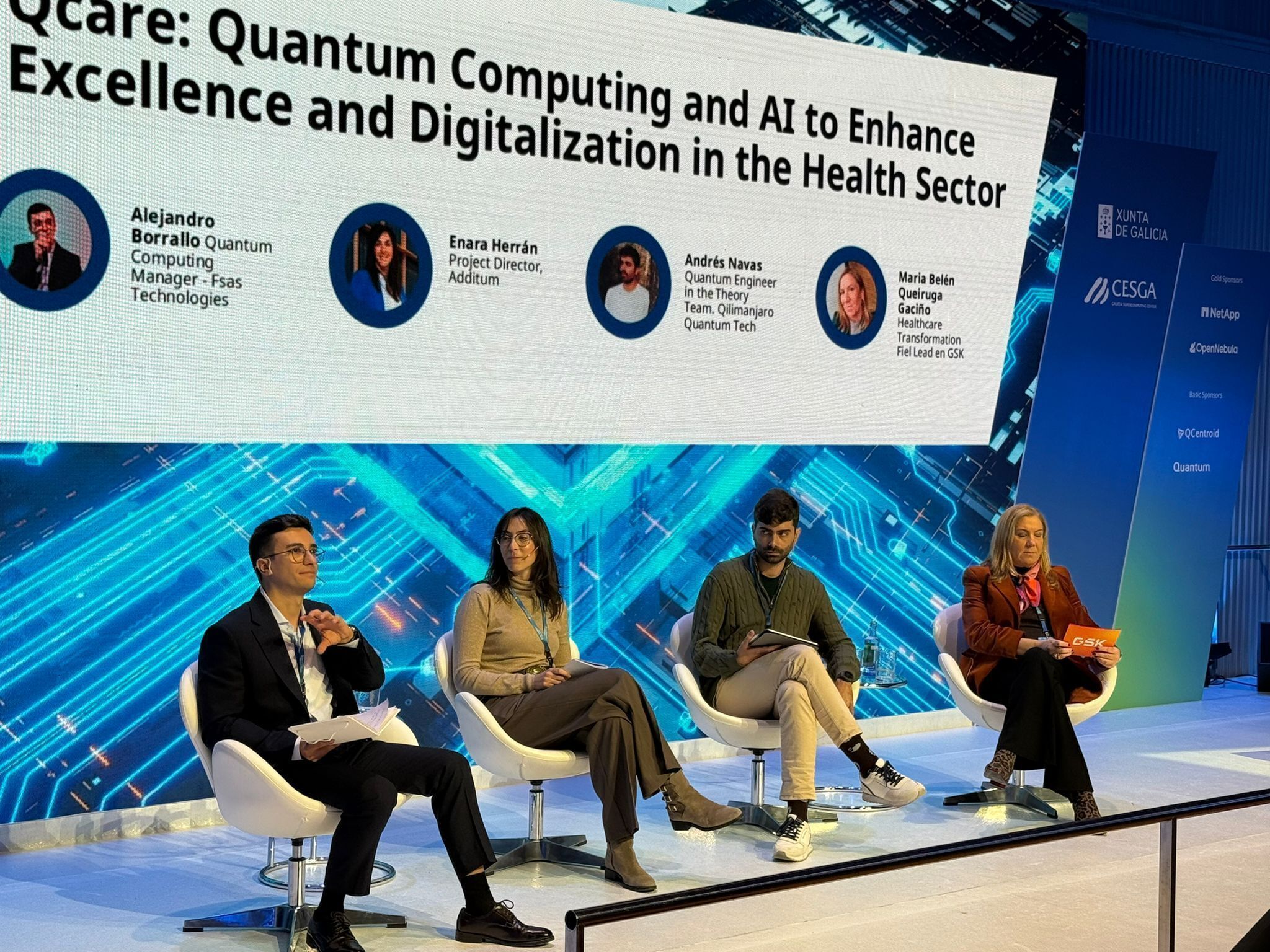
Thanks to this team, 2025 became a year of global presence and increased visibility: we attended 78 events worldwide, including speaking roles at the MWC Barcelona & Doha, the APS March Meeting, The Economist’s Commercialising Quantum Global and the International Year of Quantum. We also presented in more than 20 scientific conferences, published 15 scientific papers, and organized and hosted the International Network for Quantum Annealing (INQA) conference representing Qilimanjaro across leading scientific, technological, and industry forums.
Our progress was also highlighted in major outlets such as Forbes, The Quantum Insider, and Sifted, reflecting the growing recognition of our hybrid approach and our role in shaping the future of quantum technologies. As we look ahead, we are preparing to launch SpeQtrum, our multimodal Quantum-as-a-Service platform that will bring digital, analog, and hybrid quantum computation to users everywhere.
This year has laid the foundation for the next stage of our journey, and we are looking forward to reaching new heights in 2026.